


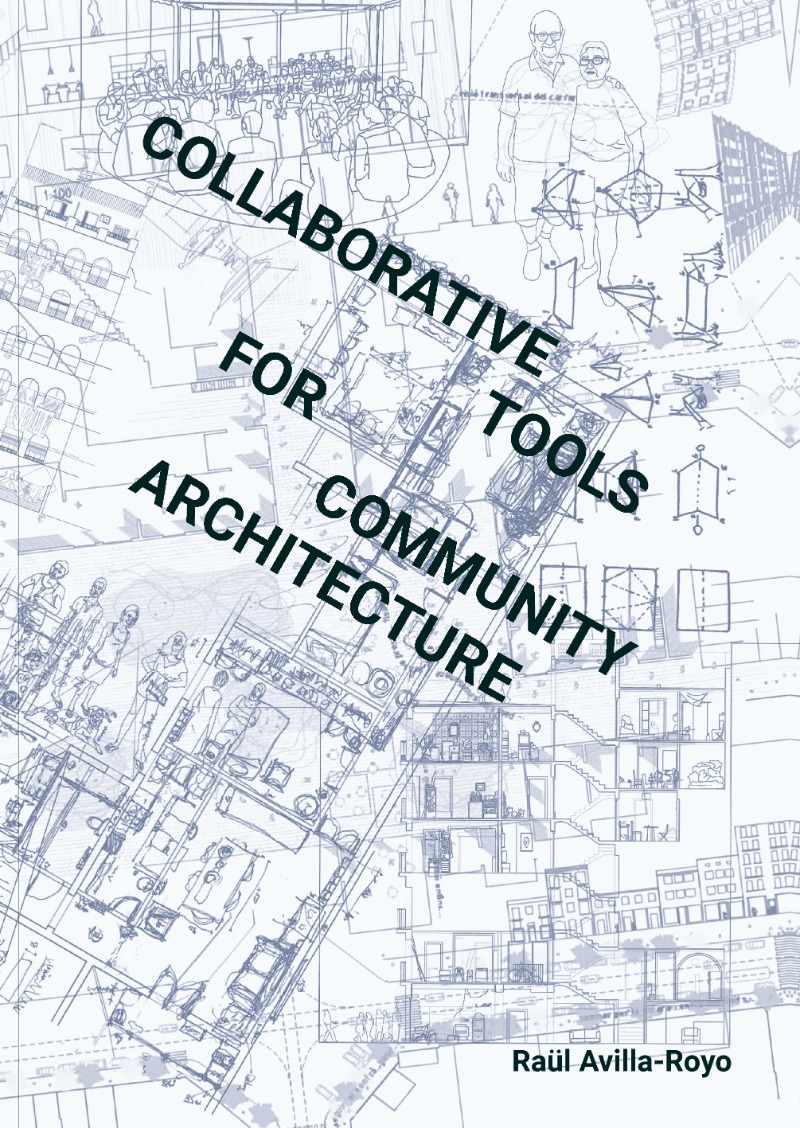
Collaborative Tools for Community Architecture
Colaborador:Johns, Cathy (Traductor)
Editorial:Arquine
Materia:Arquitectura
Público objetivo:General
Publicado:2023-06-13
Número de edición:1
Número de páginas:432
Tamaño:17x24cm.
Precio:$500
Encuadernación:Tapa blanda o rústica
Soporte:Impreso
Idioma:Inglés
Libros relacionados
Las medidas de una casa - Fonseca Romero, Francisco Xavier
Diseño y arquitectura hoy - Castro Álvarez, Hilda Berenice; Ruiz Esparza Díaz de León, Blanca; González Romo, Héctor Omar; Berumen Covarrubias, David; Botello Arredondo, Irsa Daniela; Garnica Mejía, Braulio; García Casillas, Elisa Marcela; Terrón Contreras, Denisse; Bojórquez-Morales, Gonzalo; Gutiérrez Sánchez, Víctor Manuel
Barragán fuera de Barragán - Canales González, Ana Fernanda
El sentido del oficio - Gutiérrez Peregrina, Francisco Javier
Reseña
The way we understand and practice architecture is changing due to the increasing inclusion of users in the project. In contrast to commissioned architecture, whether public or private, collaborative architecture emerges as the practice of including different agents, especially neighbors and users, as a collective but heterogeneous subject. Thus, community architecture implies a change in the role of the architect, who goes from being a service provider to a facilitator, from being an independent expert to establishing a productive collaboration with the users, from architecture as a product to architecture as a process.
This book, a result of Raül Avilla-Royo's research for his Ph.D. thesis at the Architectural Association (AA) in London, is a compilation of tools for collaborative architecture that start from analysis, management, data collection, and design to instrumentalize the practice in research. It demonstrates how the architectural project becomes an instrument for citizen involvement in decision-making in the urban environment and, conversely, how citizen involvement is an opportunity to improve the design and appropriation of architecture.
